Introducing the
Designing for Social Good Toolkit
This Toolkit shares the practice of how and why design can impact societal challenges to create a better future for everyone. It has been created for local councils, the third sector, higher education, healthcare, governments and more to find out how to tackle challenges and improve lives for people at the same time.
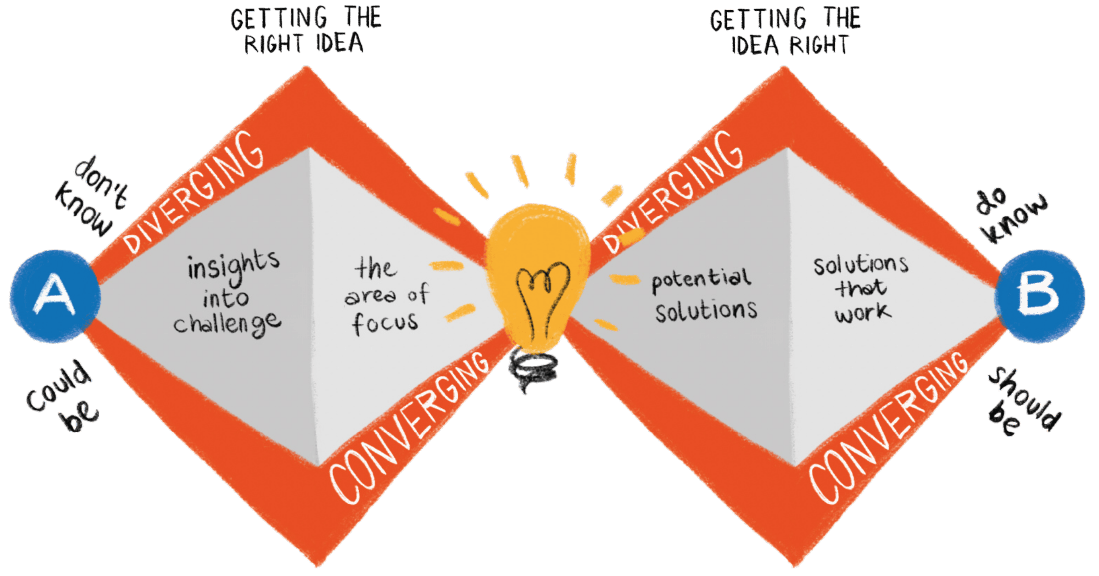
It follows 8 phases that will take you from initial challenge to scaling solutions locally. Learn about the key mindsets to innovate in the face of complex problems, tools, methods, and advice to help put this approach into action, and worksheets that support you to run your own collaborative sessions.
Design Toolkit Process
Stages of the toolkit
-
1
Understanding the client vision
Building a good relationship and sense of understanding with your client. Leading by example with transparency about how you will work and what you know to instil confidence in your approach.
-
2
Setting up for success
Creating a strong foundation within your team and partners. Identifying who you should bring together, how you will work, and setting expectations to form a clear, shared understanding.
-
3
Understanding the challenge
Questioning what the challenge you are trying to solve actually is. Taking time to research the ask at the heart of your project by speaking to people and capturing insights to help us examine the information we have started out with. From here, we can identify if the central challenge should be refined or reframed to provide a sound rationale.
-
4
Moving from challenge to opportunity
Transforming challenges that have been explored into opportunities for innovation. Observing the breadth of your research from the previous phase and distilling the insights into key areas of potential where design can add the most value.
-
5
Coming up with ideas
Being open to all ideas that could answer our challenge. Driving for quantity over quality to give attention to all aspects of our opportunities and avoid tunnel vision. Co-designing concepts with the people at the heart of our challenge to transfer power to those with lived experience.
-
6
Prototyping and testing ideas
Bringing your ideas to life by taking them from paper to prototype. Working creatively and physically to test your concepts in iterative cycles, adapting them from low fidelity to high fidelity as you learn what should be kept and what is missing.
-
7
Making it real
Realising your prototype solutions in place, learning and adapting as you go to refine how it functions in situ. Developing an agile and sustainable solution that can add value in the intended context and be scaled for different areas of the city.
-
8
Reviewing and evaluating
Weighing up the findings that have come of your design journey to understand what has been successful and what you can do differently next time. Analysing with your team the impact of your solution, how you have worked together and the feedback of partners and people.